Why Oil Seals Fail Early and How Maintenance Teams Can Prevent Repeat Leakage
A practical maintenance blog on common oil seal failure causes, their business impact, and simple preventive actions for better equipment reliability.
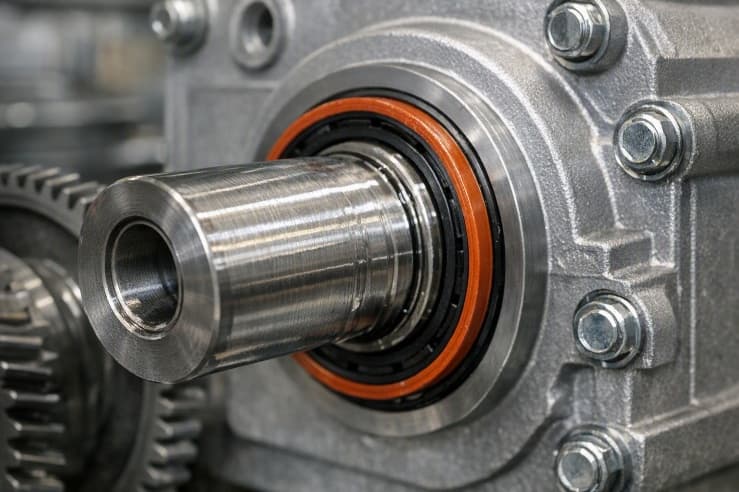
Why Should We Pay Attention to Oil Seal Reliability?
In rotating equipment, gearboxes, hydraulic systems, motors, pumps, and heavy machinery, oil seals help retain lubricant and prevent dust, dirt, moisture, and foreign particles from entering critical areas. A minor leak may look harmless at the beginning, but over time it can create production losses, housekeeping issues, safety risks, and repeated maintenance interventions.
Confirm seal suitability before use
Verify shaft and housing condition
Standardize installation practice
Strengthen inspection and operating control
So, What Usually Causes Early Oil Seal Failure?
While oil seals are robustly engineered, their delicate sealing lips depend heavily on perfect operating conditions. When these conditions deviate even slightly, the heat generated by friction spikes dramatically, leading to hardening, cracking, and eventual fluid bypass. It is rarely the seal's intrinsic material at fault. Instead, mechanical stress from dynamic shaft runout, contamination under the lip, or improper tool usage during press-fitting can compromise the micro-geometry of the elastomeric lip from day one.
Top 5 Causes of Premature Oil Seal Failure
The seal is damaged during installation
Pressing the seal in crookedly or using sharp edges can score the outer shell or tear the sealing lip before operation even begins.
Impact: Early leakage and shortened seal life.
The selected seal does not match the operating conditions
Mismatched elastomers in high-temperature environments or chemical fluids cause rapid degradation, swelling, or hardening of the rubber compound.
Impact: Hardening, swelling, or accelerated wear.
Shaft condition is not suitable for effective sealing
Excessive shaft roughness acts like a file against the rubber lip, while a surface that is too smooth prevents the vital oil film from forming, causing dry-running.
Impact: Ineffective sealing and leakage.
Contamination reaches the sealing surface
Abrasive dust, metallic shavings, or water bypass the primary lip, scoring both the rubber and the metal shaft.
Impact: Abrasion of sealing surface.
Pressure, temperature, or lubrication is not controlled
Unintended pressure spikes inside the gearbox push the lip off the shaft, while insufficient lubrication leads to catastrophic heat buildup.
Impact: Deformation, cracking, and loss of elasticity.
Business Impact of Oil Seal Failure
An oil seal might be a low-cost item, but its failure commands severe financial penalties in unscheduled downtime, environmental cleanup costs, and catastrophic bearing failures.
Reduced machine efficiency — Low lubricant level causes friction and power drain.
Frequent breakdowns — Dry running leads to heat seizure of dynamic parts.
Increased maintenance interventions — Costly labor and parts replacement cycles.