Optimizing Pre-Heater Fan Performance with Limit Float Couplings
JK Fenner partnered with Dalmia Cement Ltd. to address excessive axial vibration in a Reitz pre-heater fan by installing a customized Limit Float Pin Bush Coupling. The solution controlled shaft end float, maintained motor rotor alignment, and reduced vibration to safe levels below 4 mm/sec across horizontal, vertical, and axial planes, ensuring smoother and more reliable operations.
Quick Takeaway
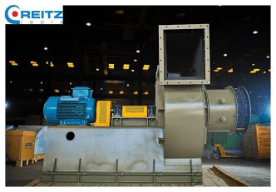
JK Fenner collaborated with Dalmia Cement Ltd. to optimize a Reitz make Klin Pre-Heater Fan. By replacing the existing standard coupling with a customized Bush-Type Limit Float Coupling, the client successfully restricted end float between the two shafts and minimized problematic vibrations.
The Challenge: Excessive Axial Vibration
The facility was experiencing issues where the axial vibration on the fan application was more than the permissible limit. Prior to the intervention, the system was utilizing a Fenner N-std. coupling NBC-15:CS NS equipped with a standard pin and bush assembly.
The Solution: Customized Limit Float Coupling
To address the excessive axial play, JK Fenner offered a Limit Float Coupling solution designed to physically restrict end float between the two shafts and maintain the precise position of the motor's rotor.
The solution featured customized, longer limit float pins alongside customized spacers and plain washers sized according to the allowable float per side.
The heavy flange was specifically modified with counterbores to suit the customized spacer and plain washer.
By maintaining the rotor's position centered within the magnetic field, the coupling ensures efficient torque transmission, which further increases the motor's efficiency.
Business Impact and Results
With the installation of the limit float pin bush coupling, the client achieved the following results: Vibration Reduction: The customer achieved safe vibration levels below 4 mm/sec across horizontal, vertical, and axial planes in the pre-heating fan application. System Stability: The coupling successfully prevents excessive axial play, ensuring stable and reliable long-term operations.